Fermina Cotterell: She Made It Matter
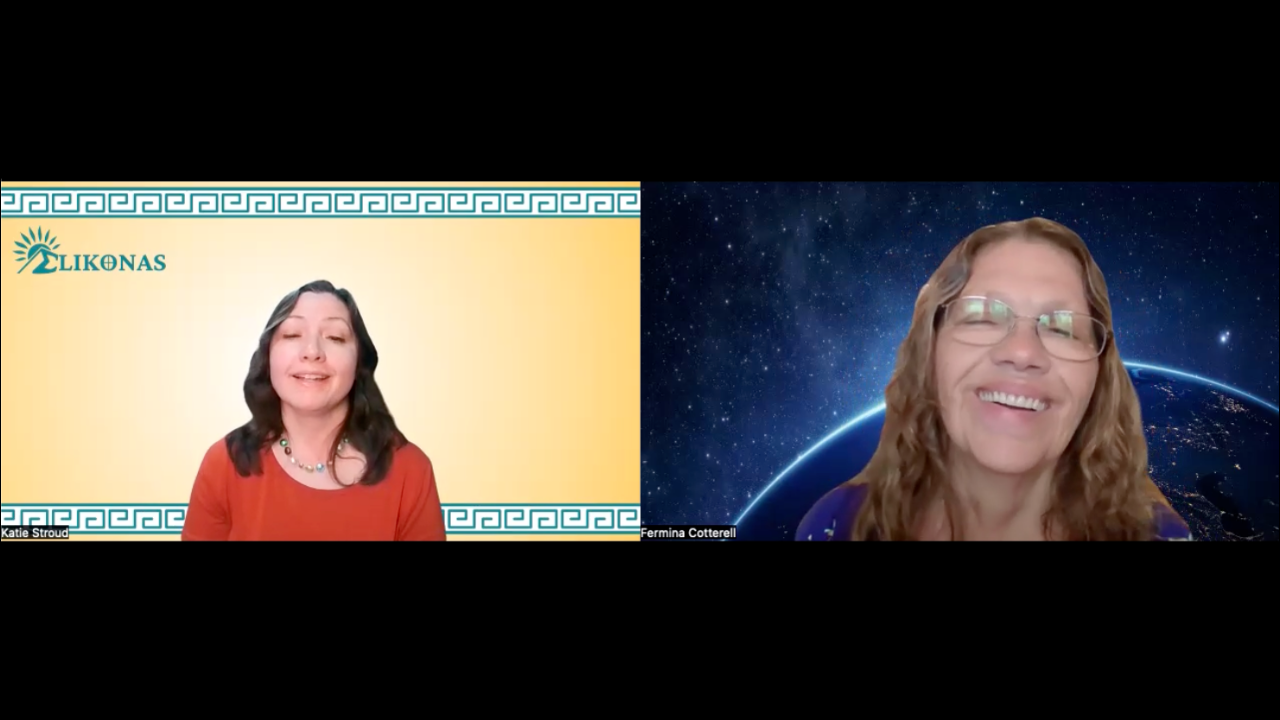
In the seventh episode of What's Your College Story?, Katie sat down with her mom, Fermina (Fermie) Cotterell. It's a conversation a long time coming, and one that gets at the very heart of why Elikonas exists.
Fermie was pulled out of school in the 10th grade. At age 15, she went to work to help support a family of nine children in the South Valley of Albuquerque, New Mexico — one of the roughest neighborhoods in the city. She never got the education she wanted. She was told, in ways both direct and indirect, that nothing she did really mattered.
She spent the rest of her life proving that wrong. She poured everything into her children, especially how she insisted and modeled that education was one of the most important things in life they could do for a better future. That life philosophy shaped the person who eventually built Elikonas.
Pulled Out in 10th Grade
Everything to me, as I had my children, was that education was the most important thing in life. For the reason that I was not able to have that education that I wanted so bad.
I was taken out of school in 10th grade. There were nine children. My mom couldn't really speak English, so about the only thing she could do was house clean. My daddy was disabled. So as we got to a certain age, we were taken out of school — because school wasn't important. Work was, to bring in money and take care of the family.
I was in 10th grade. It's the first time I remember. I was so disappointed and so upset. My sister came up to me at school and said, Mom's on her way. She found out you had a boyfriend and she wants you out. We went to the counselor. The counselor was upset, because I was doing really good. There were a few classes — math — that weren't important enough to me to worry about. But the rest? I knew they would help me in life.
She was 15. Her first job was at a place called Taco Fields — running a register, learning the routines, making sure everything got out on time. From there she moved to Royal Fork, where she quickly found herself picking up the work others left undone. When the manager told her to stop covering for her coworkers, she pushed back: if theirs don't get done, mine don't get done. He gave her permission to keep going.
She learned by doing. She always would.
A School That Was Built to Be a Prison
The South Valley shaped the whole family. Most of Fermie’s siblings didn't graduate. Of the nine children, only the youngest graduated high school and one earned a GED, which at the time (and to this day) carried its own stigma: *you didn't graduate right.* Two of her brothers and and one of her sisters ended up in prison. In the South Valley survival came first, and the environment made it easy to fall into the wrong path and very hard to find any other.
Fermie’s daughter Antonia attended a middle school nearby that had actually been designed as a prison: no windows on the lower floors, dark hallways, only one way in or out. When Antonia asked a teacher why there were no windows, she was told directly: most kids in this area are going to go to prison anyway, so we're just getting you ready.
Antonia goes: there is no way I am going to go to prison. If I have to get out of this school, if I have to go learn at home, I'm gonna do it. And I know my mom's gonna be with me.
She was right. Fermina was with her.
The Comeback: Bookkeeping and a Commodore 64
Fermie married young, had four children, got divorced, traversed the country on a Greyhound bus with her young children until finally settling into a more stable life in the Pacific Northwest. She struggled to make a living for her and her four children on her own and looked to social welfare services to supplement her income, help with bills and groceries, and medical care. She knew welfare was a temporary stopgap for support. She needed something more.
Welfare was not gonna do it. So I asked: is there any kind of program I can get into? And so they put me through a bunch of testing to see what I would be good at. I went in, and I got these courses — to help better my life, help better my children's life. And it worked.
She enrolled in an office management and secretarial program. Her math scores came back so high that the school redirected her into bookkeeping — a path she resisted at first (that's nothing but math, I hate math), but she excelled. She graduated with a certificate as an assistant accountant. Katie still remembers watching her do homework at the dining room table, and was inspired by her to keep learning.
After taking a bookkeeping job, her boss gave her a computer she could take home and do some of the work there. In 1985 this computer was a Commodore 64 — a massive, suitcase-sized machine with a tiny screen. She showed young Katie (age 10 at the time) how to use it to build simple programs using Beginner's All-purpose Symbolic Instruction Code (BASIC). That was the beginning of Katie’s interest in technology.
It meant a lot to me, for my children. To know that education was important. Kids learn by example.
The bookkeeping job itself didn't last. The office was cluttered and dusty, there were no people to interact with, and her boss was inappropriate. But while she was there, she reorganized files, put records in order, and made operations run more smoothly. Then she moved on.
The Antenna Problem Nobody Could Solve
Fermina cycled through a few factory jobs over the years — Kyocera, Intel, and eventually a company called Larson Radio. It's at Larson where one of the most remarkable parts of her story happened.
The company had been struggling for six months with a batch of new antennas that kept failing quality testing. Fermie’s job was to coat the antennas with a process that involved a tank of rubber and chemicals heated to temperatures that could burn your finger off. The result was producing antennas that didn’t work. Nobody could figure out why.
Fermie started experimenting on her own. More heat here. Less there. A different mix of chemicals. Different timing. She tried variations and tracked what happened. Quietly, without being asked, she worked out the problem.
The engineer noticed I was changing things. He says, did somebody tell you you could do that? I said, no, but everything's failing and you know it's useless to keep doing the same thing. He said, are they getting tested? I said yes — we've had about four or five lots come back 100% working.
He went back to the office. Then he came back to me and said: what did you do? I explained — a little more heat on some, a little less on others, changing the rubber, changing the chemicals. He said we've been fighting with these for six months. I'm going to put you in charge of this department.
She didn't want to be a manager. She didn't feel qualified to train anyone. But she did it. She wrote down everything. She trained her team. And the process held. Fermie believes the protocols she developed are still in use at that company today — under a different name, making different things, but still running her fix.
Kind of makes me proud that I was able to do that. Because I grew up being told nothing I did mattered, nothing I did was worth it. As my sisters — we were nothing but good for raising kids or helping around the house.
What She Passed On
Fermie was the first of her siblings to have all four of her kids graduate from high school. Only the youngest sibling was also able to claim that achievement later. Katie was the first in all of the extended family to earn a bachelor’s degree. Others began to follow including a cousin and her sisters.
But the lesson Ferme passed on wasn't go to college or else. It was something more fundamental: education matters. Whatever form it takes. Whatever it costs you to get it. You do it.
Katie reflected on this honestly during the conversation — acknowledging that even with Fermina's clear message, something in the culture she grew up in laid a quieter message underneath it: school is for other people. Not for us. We're not the kind of people who become doctors and lawyers. No one ever said it out loud. It was just there, absorbed from the environment, from the bars on the school windows, from the way poverty conditions expectations.
We're not good enough. That's what it felt like.
That's exactly the mindset Elikonas is being built to address. Not just the financial or logistical barriers to education — but the deeper, harder-to-name belief that certain kinds of learning, and certain kinds of people, don't count.
Still Learning. Not Done Yet.
Fermie is retired now. She recently moved somewhere new and is still building a community there. She described the feeling of being at home with nothing to prove herself with — and how hard that is, after a lifetime of working and doing and figuring things out.
I want to feel like I'm not dead to the world. Like I can do something, I can learn something, I can make something of myself. Instead of being home doing nothing.
She wants to learn something new — something that plays to her strengths as a creative, people-oriented problem solver, and that gives her a marketable skill and a reason to show up somewhere. Katie and Fermina plan to come back together for a future episode, once Elikonas is live, to walk through exactly what the platform recommends for someone in her position. Stay tuned! That episode will be worth watching.
In the meantime, Fermie made an emotional request for Katie to share a post she wrote for her mom on Mother's Day. It inspired Fermie and she wants it to inspire others.
Why Fermina's Story Matters to Elikonas
Fermina Cotterell fixed an engineering problem that stumped a professional team for six months. She earned a bookkeeping certificate through a welfare-to-work program. She learned to run a computer before most people had ever seen one. She managed a department. She raised four children who all graduated from high school and most of which found their way to higher education, against the gravitational pull of an environment that told all of them they weren't the kind of people who did that.
None of that shows up anywhere in a standard profile. There is no transcript. There is no résumé line for solved a six-month manufacturing problem through systematic experimentation. There is no credential for single mother who worked graveyard shifts so she could chaperone field trips.
Elikonas is being built for Fermie — and for every person like her, who has learned more than a diploma captures, worked harder than a job title reflects, and been told by systems and environments and silences that their education doesn't count.
It counts. All of it counts.
Watch the Full Episode
Watch the full conversation between Katie and her mom on YouTube. This one's personal — and if you've ever felt like the kind of person education wasn't designed for, it might be exactly what you need to hear.
Take our survey! (And share)
Elikonas is currently in development — and we're building it with real learners in mind from day one. Take our short survey and help shape what the platform becomes.
Share YOUR College Story
Every week on What's Your College Story?, we sit down with real people and talk about their real education journeys. The winding ones. The interrupted ones. The ones that took longer than expected and meant more because of it.
If you have a story to share, we'd love to feature you — either as a podcast guest or in a written profile right here on the blog. Email us and submit your story, or just let us know that you'd like to chat. We'll either turn that chat into a blog post or schedule you to be on the show. Whatever is most comfortable for you.
The more voices we gather, the stronger the case becomes: education is not a straight line, and why would it be? Those paths are as unique as you are!
About What's Your College Story?
What's Your College Story? is a weekly podcast hosted by Katie Stroud, founder of Elikonas, Public Benefit Corporation. Each episode features a real conversation with a real person about their education journey — the detours, the discoveries, and everything in between. The show exists to celebrate non-traditional paths and to build the community that Elikonas will serve. New episodes drop every week. Subscribe on YouTube or wherever you listen to podcasts.
Elikonas is a mission-driven platform expanding equitable access to education and workforce development — connecting learners, education providers, and employers in ways that increase opportunity, economic mobility, and skills attainment. Coming soon.