Christabel Behr: The Plant Lady
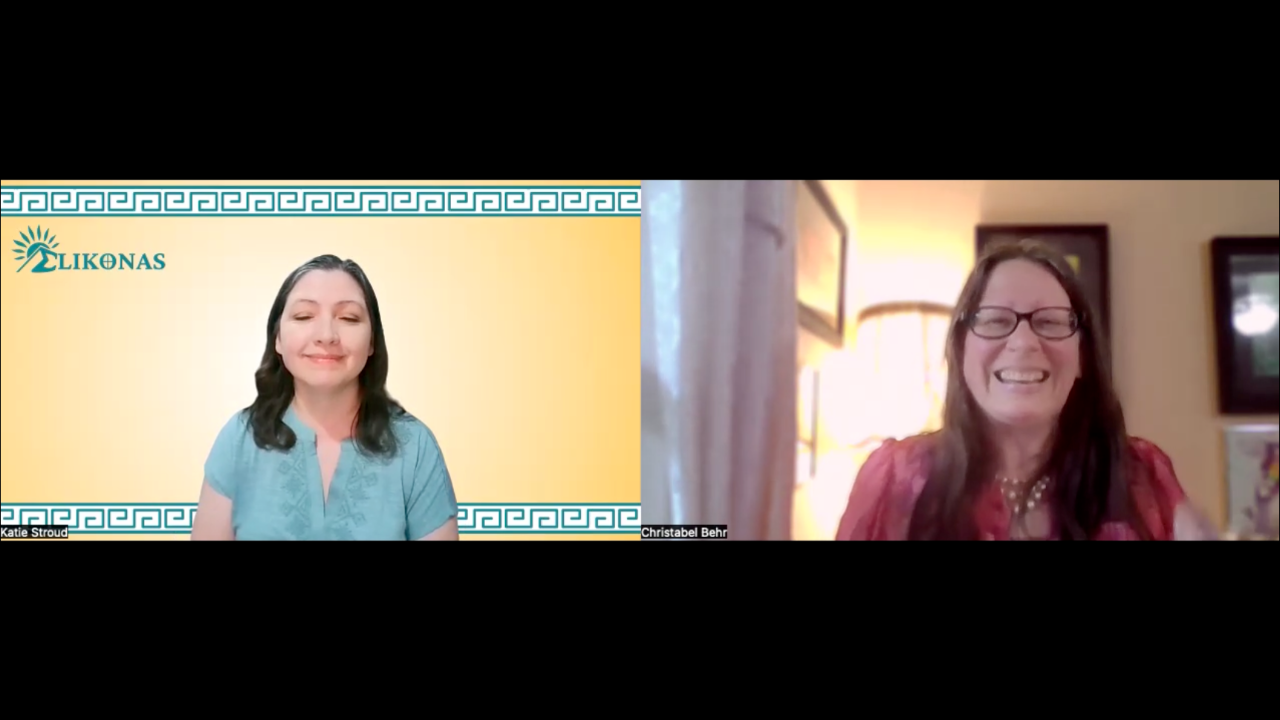
In the fifth episode of What's Your College Story?, Katie sat down with Christabel Behr — childhood friend, landscape designer, and the person Katie calls when her roses need saving. They became friends in fifth grade, lost touch for a while when Katie left for college, and have reconnected in recent years. Christabel lives in the Pacific Northwest, has a job she genuinely loves, and has spent the better part of her adult life proving that a degree isn't the only way to become an expert in something.
Her story starts with a dream — a very specific, very vivid dream of campus life — and a family that didn't quite know what to do with it. In her own words:
The Campus Dream
I really, really wanted to go to college and I wanted to have a professional degree. My mom was a stay-at-home mom who didn't start working until I was 15 — she was kind of confused about the process too. We were learning those skills at the same time.
When I was 10 years old, my family attended religious conventions at OSU in Corvallis. We'd stay in the dorms for a few days each summer, and I just fell in love with it — the campus, the shared bathrooms that probably nobody else was excited about, sitting out on the lawn, the little art shop down below where I wanted to go every year. I just really wanted that immersive studying life, where you get really good at something. I'd watch the Brady Bunch and see Mr. Brady come home to a family that was calm and happy, and think: I want that kind of life.
I told my dad when I was 10 that I wanted to go to college, but the money wasn't there when the time came.
The Car vs. College
My mom was a stay-at-home mom who didn't start working until I was 15. She was figuring out the world at the same time I was. Neither of us really understood how college worked — how to apply, where the money came from, what grants even were. My entire family, when I brought it up, had one answer: You need a car. Not college. A car.
So I ended up getting the car. And college came slower, in bits and pieces, over the years.
The one break I caught was Running Start — a Washington State program that enables high school students earn both high school diploma and a two-year college degree simultaneously. The local community college, Clark College, happened to be right across the street from my high school. I didn't need a car to get there. A counselor saw that I wanted something and pulled a classmate aside and said, can you take her? — and just like that, I was walking across the street to learn what was available.
That's how it started. Someone pointed me in a direction and I walked.
The Learning That Never Stopped
What followed was years — decades, really — of gathering knowledge from every direction Christabel could find.
She made a list:
- An Associate’s in Art and Science in Landscape Technology (two years, working 30 hours a week to cover my half of the tuition because I didn’t want debt)
- A Master Gardener certification through Washington State University
- A Master Pruner certification through Plant Amnesty
- A year-long program affiliated with a college in Seattle (this one took her up north where I was and we got the opportunity to visit)
- A pre-apprenticeship program through Oregon Tradeswomen, where I got to try welding, electrical work, woodworking, and construction site experience
- The Regenerative Leadership Institute's permaculture design certification Wild Food Adventures with John Kayles, a PhD in nutrition who takes students into local areas to identify and understand edible plants
- Botany in a Day — a book that doubles as an online program with students from around the world
- A landscape design program at Portland Community College
- And an attempt at VectorWorks, the AutoCAD program for landscape design. (I’d like to revisit this one someday with a better textbook)
Christabel didn't receive a four-year degree, but she studied enough in her field that it adds up to one.
What She Actually Wanted
The thing Christabel always wanted was botany. Plant identification in Latin.
At age 19, she traveled to Egypt and walked through a botanical garden where she couldn't speak the language of the other visitors. But many of them knew botanical Latin. She found that she could talk to other people from other countries about plants. What a wonderful thing, she thought, to have a universal language about something so wonderful in the world.
She never got the botany degree she wanted. She did floristry first because she didn't quite understand it wasn't what she was looking for. Then landscape technology. Then the Master Gardener program. Then more and more, always chasing the thing she'd imagined at 10 years old.
This year, she told Katie, is finally the year she feels like she can stop gathering. I have the basics now. I can start doing the work and making the money off all this knowledge I've been gathering.
And she has no college debt. Not one dollar.
The Boss Who Handed Her a Catalog
About eleven years ago, Christabel started working for a landscape company. On her first day, the owner — an entrepreneur with no college degree himself — handed her a thick plant catalog and said: "I believe in self-education. Here. Figure it out."
She was intimidated at first. Then she started looking things up. How big does this plant get? When does it flower? Does the flower have a scent? She spent the first two years just learning on her own, from a book and from working in the soil, and it turned out that's exactly what she needed. Now people call her the Plant Lady.
When they need something identified, when they need to know what will grow where, when they want to get it right, they call the Plant Lady.
Today she manages roughly $150,000 in plant purchases a year, places plants on job sites, meets with homeowners to understand their needs, and hand-drafts landscape designs. The math is constant: square footage, delivery loads, native plant percentages for habitat certifications, spacing, materials.
Her first independent paid design project is coming up: helping a client achieve backyard natural habitat certification, getting from almost no native plants to somewhere between 5 and 50 percent.
She loves it. That was always the goal — to spend her days doing something she loves. And she got there.
The Lightning Round
Katie asks a few quick questions at the end of every show:
Hardest thing to learn? VectorWorks — and everything it represents. Sitting at a desk. Not being outside. Not having her hands in the dirt. That's the part that doesn't come naturally (pun intended).
Favorite thing to learn? Botany. Plant ID. Being outside, touching things, smelling things. Knowing the name of what's growing next to you and what it needs and what it offers. As she put it: "It really puts you in touch with the planet."
Would she do it differently if money and transportation had never been obstacles? Her answer was honest and a little complicated: No — but also, there could have been a whole different life she couldn't even have imagined. Two thoughts, clashing. Most people who've taken the long way give some version of the same answer.
One thing college can't teach, even if it tries? How to interact with people in public. "That's something you learn by doing it." No classroom can give you that.
Why Christabel's Story Matters to Elikonas
Christabel has a file somewhere where she keeps all her certifications. They're scattered across programs, institutions, parks, gardens, and years. There's no single place where the floristry certificate and the permaculture design certification and the wild food adventures and the Master Pruner training and the Egypt story all live together and tell the complete story of who she is and what she knows.
That's the problem Elikonas is building to solve. Christabel described it perfectly herself: "You have all these things which maybe add up to a lot more years than a four-year degree, but you don't have a way to explain them, or you have ten or fifteen different certifications and you want to condense that into one thing — just one place that shows what you have overall."
That place doesn't exist yet. Elikonas is building it. Because Christabel Behr is the Plant Lady. She knows what she knows. And she's earned every bit of it — just not in any way a full college transcript would recognize.
Watch the Full Episode
Watch the full conversation between Katie and Christabel on YouTube. If her story resonated with you, share it with someone who needs to hear it.
Take our survey! (And share)
Elikonas is currently in development — and we're building it with real learners in mind from day one. Take our short survey and help shape what the platform becomes.
Share YOUR College Story
Every week on What's Your College Story?, we sit down with real people and talk about their real education journeys. The winding ones. The interrupted ones. The ones that took longer than expected and meant more because of it.
If you have a story to share, we'd love to feature you — either as a podcast guest or in a written profile right here on the blog. Email us and submit your story, or just let us know that you'd like to chat. We'll either turn that chat into a blog post or schedule you to be on the show. Whatever is most comfortable for you.
The more voices we gather, the stronger the case becomes: education is not a straight line, and why would it be? Those paths are as unique as you are!
About What's Your College Story?
What's Your College Story? is a weekly podcast hosted by Katie Stroud, founder of Elikonas, Public Benefit Corporation. Each episode features a real conversation with a real person about their education journey — the detours, the discoveries, and everything in between. The show exists to celebrate non-traditional paths and to build the community that Elikonas will serve. New episodes drop every week. Subscribe on YouTube or wherever you listen to podcasts.
Elikonas is a mission-driven platform expanding equitable access to education and workforce development — connecting learners, education providers, and employers in ways that increase opportunity, economic mobility, and skills attainment. Coming soon.