What Veterans Carry Home
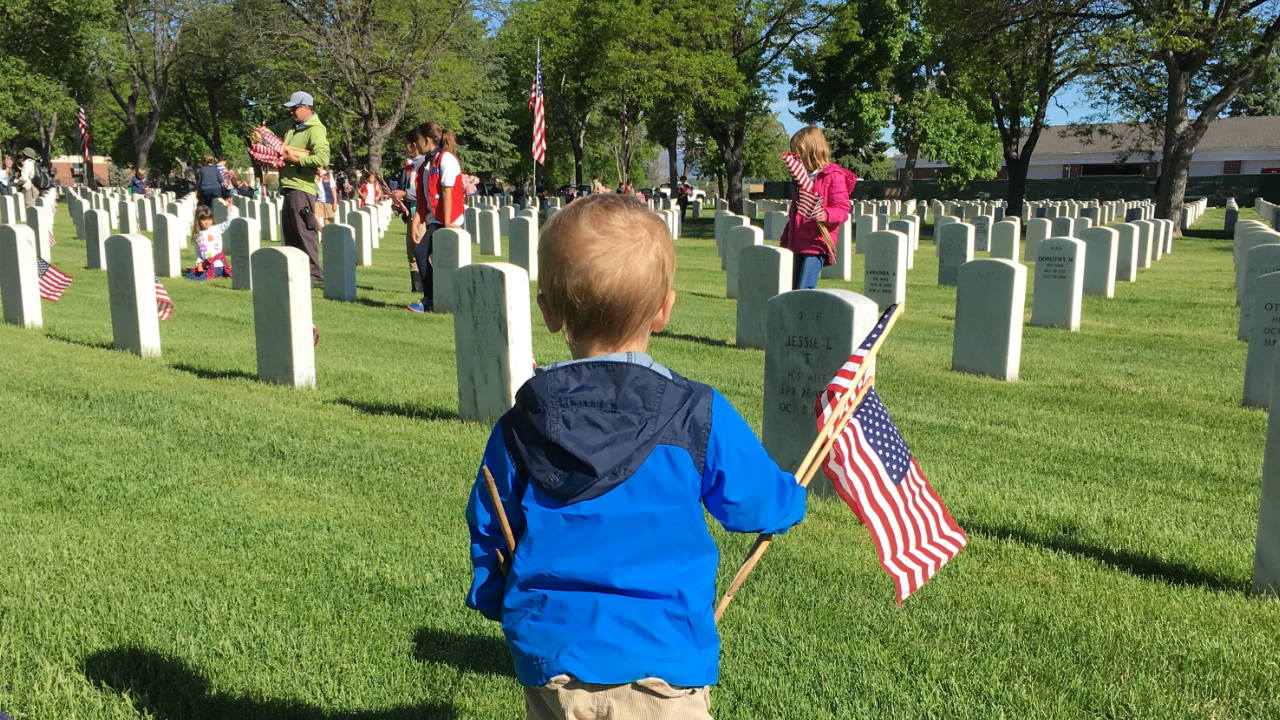
Today is Veterans Day in the United States and Remembrance Day in Canada and across the Commonwealth. To every veteran reading this: thank you. Thank you for the years you gave, the places you went, and the things you learned to do under pressure that most of us will never have to.
Thank you, too, to the people standing behind them. Spouses, partners, parents, kids, roommates, and friends with a spare couch. They carry a share of the load, often without a ribbon or a parade.
One thing veterans bring home rarely gets talked about: everything they learned. Too often it arrives with no record anyone outside the military can read.
My Son's Story
My son Andrew served in the U.S. Air Force. When he came home, he had real skills and real experience. What he didn't have was a way to list them that a civilian employer would recognize, and finding work was hard.
So he did what we tell veterans to do. He used his GI Bill and enrolled at the Art Institute of Seattle. On Friday, March 8, 2019, the school closed its doors after 73 years. Students found out about two weeks before the end of the quarter. The work Andrew had done that quarter disappeared with it. There was no proof he had completed it.
The closure rippled outward. International students in the U.S. on study visas had to go home. Andrew lost his GI Bill stipend and couldn't finish his degree. He had been sharing an apartment with his girlfriend, whose parents supported her while she was in school. When the school closed, that support ended too. They moved out and stayed with friends while they figured out what came next.
Andrew wasn't alone. Another student veteran from the Art Institutes later told the U.S. Department of Education that students were left without information about transcripts, reimbursement, or how to continue their education.
To Andrew's girlfriend, her parents, and the friends who opened their doors: thank you. This is what supporting a veteran looks like.
It Isn't Just Andrew
About 200,000 service members leave the U.S. military every year, according to the Milken Institute. There were about 17.26 million veterans in the U.S. civilian population in 2025, with 8.34 million in the labor force, based on Bureau of Labor Statistics figures.
Many of them work below their skill level:
- A Penn State study of about 3,000 post-9/11 veterans found that one-third were underemployed, and another 10% were both underemployed and unhappy with their pay. Veterans reporting these problems earned $11,000 to $24,000 less than peers who didn't. The lead author said part of the cause is that employers struggle to understand how military skills, especially leadership, translate to civilian work. (Phys.org summary)
- Penn State's March 2026 follow-up found that veterans who felt both underemployed and underpaid were four times more likely to leave their jobs. Its first recommendation: better translation of military skills before service members separate. (Penn State Clearinghouse)
- The Milken Institute reports that about half of newly transitioned veterans have changed jobs within a year, and about two-thirds believe they are underemployed. (Milken Institute, 2025)
- A peer-reviewed study found that enlisted veterans reported higher underemployment than officers, based on a mismatch with the skills and leadership experience they gained in service. (Work, 2022)
These veterans have the skills. What they lack is a record employers can read.
What Already Exists, and Where It Stops
The U.S. has built real tools for this, and they deserve credit.
- ACE and the Joint Services Transcript. Through the Defense Department's Military Training Evaluation Program, the American Council on Education (ACE) evaluates military training and occupations. Those evaluations appear as college credit recommendations on the Joint Services Transcript. (DANTES)
- Faculty-reviewed and widely accepted. College faculty who teach in each subject do the evaluations, and more than 2,300 colleges and universities accept ACE credit recommendations. (DANTES fact sheet)
- Air Force records. Airmen like Andrew get their transcripts through the Community College of the Air Force or Air University rather than the Joint Services Transcript. (ACE)
- GI Bill restoration. The Forever GI Bill lets the VA restore GI Bill entitlement to veterans whose schools closed. Closures between 2015 and 2021 fall under Section 109 of that law. (Congressional Research Service; Veterans Education Success)
The gaps are in the details. ACE credit is a recommendation, and each college decides what to accept. These transcripts mainly cover formal military training, not everything a person learns on the job or on their own. GI Bill restoration has a catch: if 12 or more credit hours from the closed program transfer to a new school, the VA revokes the restored benefits. (VA, archived) Veterans can end up choosing between proof of their learning and the benefits they earned.
The Same Problem, Inside the Base
The gap shows up while people are still serving and working alongside the military. My friend, Toddi Norum, is a training analyst at an Air Force base. She works as a contractor on training for Air Force Avionics depot repair.
Part of her job is confirming that the technicians who repair those radios are qualified. Before someone works on circuit cards, Toddi has to verify they are trained to work safely in an electrostatic discharge (ESD) area, and at what level. No central record exists to check. She had to call the defense contractor's quality manager and ask her to pull records buried in internal systems. She only knew where to look because she had worked there before.
The training records Toddi needed were spread across learning management systems and HR platforms like Workday. As she put it, "these people should be able to carry their records with them everywhere." Many of the technicians doing this skilled work never went to college. Their proof of skill lives in systems they don't control.
She sees the same pattern at the company that employs her. In an HR meeting, she realized leaders didn't know what skills their own people had. Their solution was to ask new hires to update their resumes after three weeks on the job. She pointed out that contracts with the military often need people like cybersecurity specialists who hold certifications such as CISSP without a degree. Those skills are hard to see without a record that follows the person.
A Worldwide Problem
This isn't only an American story. On Remembrance Day, it's worth looking at our allies.
- Canada. On October 5, 2026, the House of Commons Standing Committee on Veterans Affairs began a study on civilian recognition of military skills. One veteran, now an employer, told the committee that "Canada doesn't lack skilled veterans; it just lacks a way to see their skills." (Committee transcript) Veterans Affairs Canada reports that 28% of veterans have trouble finding civilian work, citing credential recognition, health barriers, and a lack of networks. (VAC) Only 52% of Canadian veterans who worked after release had jobs that used the skills they gained in service. (Statistics Canada)
- United Kingdom. The UK's 2026 Veterans' Strategy commits to making sure veterans' skills are recognized and used. A RAND study found that some veterans and reservists still struggle to translate their skills and qualifications and have them recognized at work. (RAND)
- Australia. About 5,500 personnel leave the Australian Defence Force each year. A survey of student veterans found most earned civilian qualifications in service but got no credit toward university. (inkl) Australia's Royal Commission into Defence and Veteran Suicide called job-readiness supports fragmented and noted limited university recognition of military learning. (Defence)
Why This Matters to Me
Andrew's story is part of why I founded Elikonas. I wanted to build a learning record that belongs to the learner. It should hold everything you learn, from any source, and stay with you even when a school closes or an employer's system doesn't follow you out the door.
We're early, and we have a lot to build. But veterans like Andrew, and the technicians my friend works with, are exactly who we're building it for.
Thank You
To every veteran: thank you for your service, and for everything you learned while giving it. To the families, partners, and friends who make room on the couch, cover the rent, or just pick up the phone: thank you too.
If you're a veteran, or you love one, these resources can help you document what you've learned:
- Request your military transcript. Army, Navy, Marine Corps, and Coast Guard members can get a Joint Services Transcript. Air Force members can request theirs through the Community College of the Air Force or Air University.
- See what your training may be worth in college credit. Search or upload your transcript to the ACE Military Guide.
- If your school closed while you used the GI Bill, you may be able to get your benefits restored. Veterans Education Success explains how. Talk to the VA or an advocate before transferring credits.
— Katie
Sources
- Milken Institute, Thriving Beyond Service (Aug 2025)
- Milken Institute, Saluting Service, Bolstering Business (Oct 2025)
- Penn State Clearinghouse, underemployment and salary change (Mar 2026)
- Phys.org, Veterans report underemployment, pay frustration (Aug 2024)
- Work journal, subjective underemployment of post-9/11 veterans (2022)
- National Hire a Veteran Day, citing BLS 2025 figures
- DANTES, Military Training Evaluation Program
- DANTES MTEP fact sheet (Jan 2024)
- ACE, Understanding the Joint Services Transcript
- Congressional Research Service, Colmery Act (R45205)
- VA GI Bill restoration page (archived Mar 2023)
- The Stranger, Art Institute of Seattle closure (Mar 2019)
- KIRO 7, Art Institute of Seattle shuts down (Mar 2019)
- Veterans Education Success, Michael Nelson testimony (Jan 2024)
- House of Commons Standing Committee on Veterans Affairs, Evidence No. 042 (Oct 5, 2026)
- Veterans Affairs Canada, Question Period Note on veteran employment (Apr 2026)
- Statistics Canada, Life After Service Survey 2019
- RAND, Veterans' and Reservists' participation in the UK labour market
- inkl, Uni can be demoralising and isolating for veterans
- Australian Defence, RCDVS Implementation Board summary (Dec 2025)