Land of the Free Because of the Brave
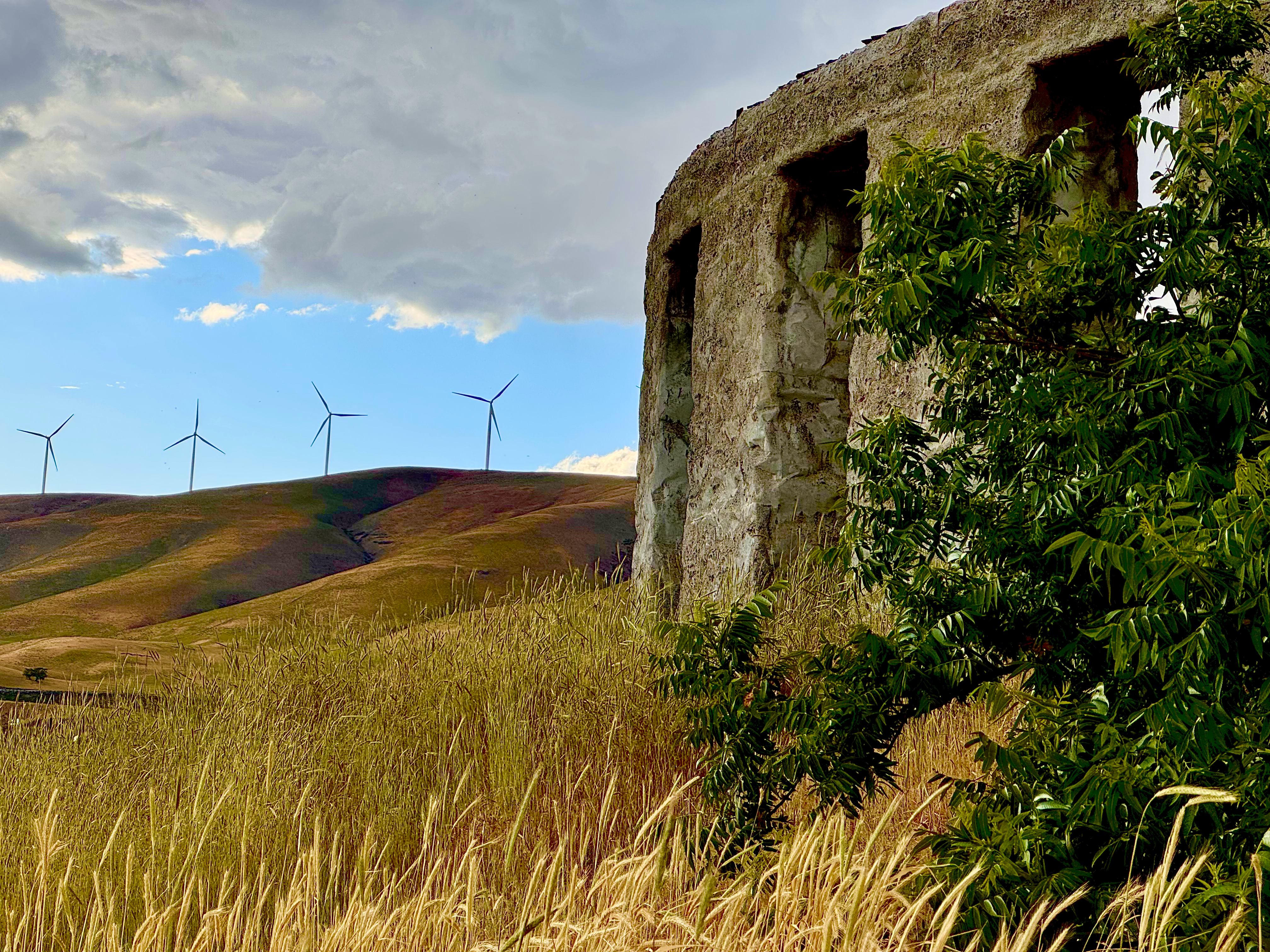
This weekend I took a road trip with a friend — down from Bremerton, WA through Portland, and along stretches of the Pacific Northwest where the land still carries the memory of the Oregon Trail. The many historical markers along the way, the names of parks and landmarks that echo the names of native tribes that cultivated the land long before we arrived, and the views — the breathtaking views!
Long, open roads cutting through terrain that once asked everything of the people who crossed it: people who left behind everything familiar in search of a life that didn't exist yet. People who bet on something they couldn't see.
This is America's 250th birthday year. And out there on those roads, with the miles rolling by and the afternoon light rolling into the skyscapes that only the Pacific Northwest can produce, I kept thinking about what it means that we can take a trip like this at all — that we can wander down a highway for the joy of it, follow our curiosity, and come home safely. It was 250 years ago that our founding fathers declared the United States of America as a free country. People went to war, died, and lost everything to stand behind that declaration. And many wars since have claimed countless American lives.
Land of the free because of the brave.
I haven't lost anyone close to me in combat. I don't have that particular grief to carry to the memorial. But I have people in my life who wore the uniform, and they've shaped how I understand what service actually looks like: a grandfather who served in World War II, uncles who served in Viet Nam, my father, a step-father, a military family I married into for a time, a brother-in-law in the Army who served in Panama. It’s not just the women and men who serve; their families all make sacrifices to support them.
My son served six years in the Air Force. Six years of his life given to something larger than himself, in service of a country that doesn't always make it easy to love. I watched him suffer from the idea that the bombs he loaded might someday be used to kill people. He still has trouble coping with that. Whatever he carried during those years — and I don’t know the details — he came home, and I am grateful every day for that.
My cousin went a different direction. He served in the Navy, and when his time was done, he went on to fly commercial airlines. That alone would be a remarkable second act. But then he went further — he became one of the pilots who flies aircraft directly into hurricanes for NOAA research. Into the storm. ON PURPOSE! So that scientists on the ground could understand what was happening, and so that communities in the path of those storms could have time to find safety. Most people spend their lives trying to get out of the way of dangerous things. He spent his career flying toward them because someone had to, and he knew how. And we’re all safer because of it.
The Paths People Take
I knew someone once (we’ll call him Campbell) who was one of the most intellectually capable people I've ever encountered. He spoke multiple languages, most of them self-taught. He could pick up a new subject and master it faster than people who had spent years studying it formally. His mind was genuinely extraordinary.
But he couldn't do school. Traditional classroom learning, with its structure and its timelines and its requirement that where you sit still and follow the prescribed path — none of it worked for him. He'd drift. Get bored. The system kept telling him, in one way or another, that he didn't fit. He went through jobs the same way. Low-end jobs because he couldn’t sit through school to prove his intellect, each one brief because he was bored and easily angered by the people who expected him to apply basic skills for human interaction.
And then he joined the Army. Specifically, Army intelligence — a field that put his unusual mind to use and gave him something school never had: structure with stakes. A framework with genuine purpose. For the first time, the discipline wasn't arbitrary or boring. It was in service of something that made use of his intellect.
He thrived and retired with a six-figure pension.
Campbell’s story is one that schools failed to tell properly: here was a person of exceptional capability who simply needed a different container. The traditional system looked at him and saw someone who couldn't follow instructions. The military looked at him and saw an asset. The difference was the context, not his intellect.
What We Build for the People Who Stay
On Memorial Day, we honor the fallen — the ones who made the final sacrifice, who never came back to the lives they left behind. One of the stops made on my roadtrip was the Maryhill Stonehenge Memorial on the Washington side of the beautiful Columbia River Gorge. This monument is a full-scale replica of England’s Stonehenge built to honor servicemen of Klickitat County who fell during the First World War. Dedicated July 4th of 1918, it is quite a site to behold. One cannot witness such a marvel and the people that inspired it without taking a moment to remember the cost of building America and a more democratic world.
In addition to honoring the fallen, I also find myself thinking about what we owe the living who serve. The veterans who come home and don't know what comes next. The people who found their footing in military service and are now standing in a civilian world that doesn't quite speak their language.
My son worked up to leading a team in the Air Force, but came home to an economy with businesses that don’t recognize that skill. He went to a school that closed down mid-semester and lost him his GI Bill academic benefits. He had to start all over from the bottom, barely making the rent, until he found his place in the culinary arts and proved his leadership skills on his way to becoming a sous chef.
And then there’s Campbell, and others like him, who needed military structure and real purpose to find a a way to use his intellect. I think of the families always moving and shifting to wherever military orders take them. How do they foster their needs for growth in a world that tests their resolve and ability to flex with the needs of our country.
Elikonas is being built for everyone who needs to find their own way.
We exist, in part, because of everyone who protected the freedom to learn and pursue a different kind of life. The whole premise of this platform — that every person deserves access to education in a form that actually fits them, that knowledge doesn't belong only to those who can navigate a traditional system, that a learner-owned record of real skills and real growth has value regardless of where it was earned — none of that is possible in a country where that freedom isn't protected.
So reflecting on Memorial Day in this 250th year of our country, I want to say thank you. To the fallen, who gave everything. To the living who served and carry that service with them to this day. To my son, my cousin, members of my family, friends I’ve met in the Navy town of Bremerton, WA and beyond, and everyone else who raised their hand and said: I'll go.
The road trip was beautiful. The roads were well-maintained. We got home without a single thought of how we might be risking our safety or freedom.
That privilege is not guaranteed, and none of it is free. Someone paid for it with their lives, and many are still paying it with their service today.
At Elikonas, we will always remember that.